Building More Than Buildings: How Adre Uses Collective Action to Shape the Future of Development
March 16, 2026
Across industries and regions, thousands of companies are part of a growing movement to redefine how responsible businesses operate. Certified B Corporations commit to balancing profit with purpose, working toward business practices that benefit employees, communities, and the environment. B Corp Month offers a moment to reflect on how these companies are turning that commitment into action.
For Adre, that commitment is embedded in the way it approaches development itself. Founded in 2020 by Anyeley Hallová, Adre is a socially responsible real estate development firm grounded in values of equitable outcomes, design excellence, economic resilience, and environmental viability.
In July 2025, Adre became a Certified B Corp under B Lab Standards v1.6, earning a score of 115, well above the former 80-point certification threshold. For a firm with just six full-time employees and a development portfolio of approximately 150,000 square feet and $148 million in projects, the certification signified both recognition and responsibility.
“For us, this is more than a certification,” says Anyeley Hallová. “It is a recognition of the path we’ve been walking all along. A path where real estate is not just about buildings, but about weaving community, equity, and sustainability into the fabric of place.”
Turning Values Into Systems
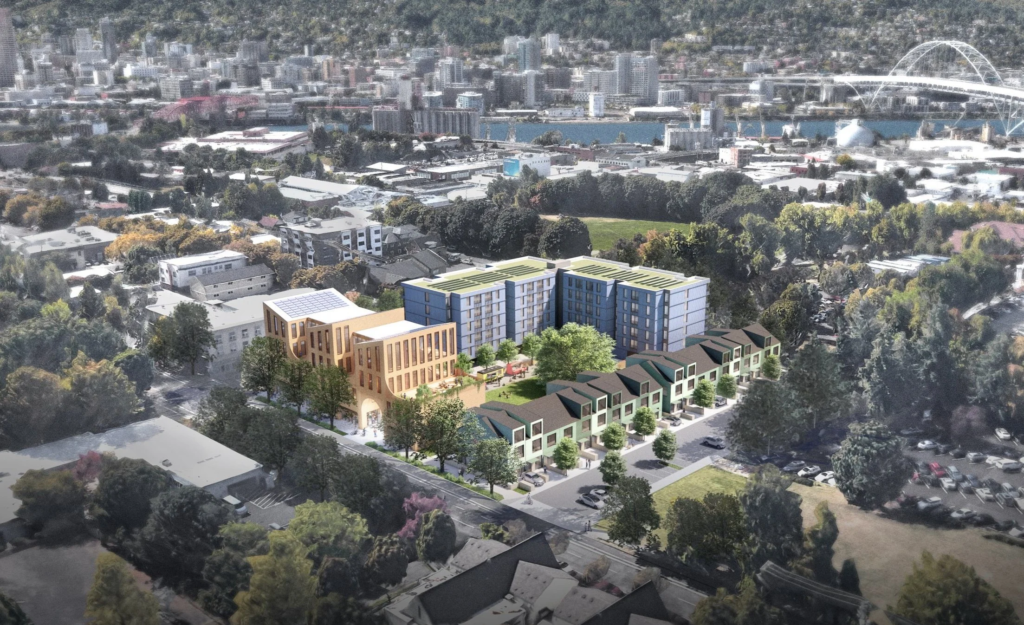
Williams & Russell Project by Adre on a 1.7-acre, equity-centered mixed-use development in Portland, OR, with completion anticipated in 2028.
Before pursuing B Corp Certification, Adre was already deeply engaged in sustainability and social equity through project-level frameworks, such as LEED, Earth Advantage, and Net Zero certification pathways. But the company recognized that building-level certifications alone were not enough.
B Corp Certification offered a way to turn inward and to examine company operations, governance, employee well-being, and accountability systems. Through a rigorous third-party verification process, Adre formalized many of the values it had already practiced while creating new systems for documentation, transparency, and impact measurement.
While the process demanded significant investment, Adre views the certification as transformative. The result is more than a badge. It is a roadmap for how the company operates and grows.
Development With Equity Built In
Adre’s approach to development reflects a core belief: economic inclusion must be embedded in the project model itself.
The firm commits at least 30% of development costs to minority-owned, women-owned, and emerging small businesses (MWESB). Rather than treating equity as a secondary outcome, the company integrates inclusive procurement directly into its development strategy.
Over the past five years, Adre has partnered with more than 40 small businesses, delivered housing for 60 families, and engaged over 500 community members in project planning and design conversations. Each development includes ongoing collaboration with clients and local stakeholders, ensuring that community voices shape both the process and the outcome.
This participatory approach reflects a broader shift in how development can operate, not as a top-down industry, but as a collaborative process that centers community priorities.
Get the Government Affairs & Collective Action (GACA) Impact Topic in Practice Guide
This guide from B Lab U.S. & Canada provides examples and resources from B Corps and partners to support companies in meeting requirements for the all-important Government Affairs & Collective Action (GACA) Impact Topic.
Collective Action as Core Infrastructure
Under B Lab Standards v2, companies are increasingly expected to contribute not only through their own operations but through systemic change. Adre’s work illustrates how collective action can be embedded into the everyday practice of development.
The firm collaborates with local governments, nonprofit organizations, and community partners to advance policies and innovations that support sustainable building and equitable growth. One example is its partnership with the City of Portland, focused on supporting the adoption of mass timber construction systems, including rocking-wall seismic technology. The project, currently about 70% through the peer review process, could ultimately influence updates to city building codes.
Adre’s collective action extends beyond policy. Team members serve in leadership roles across civic institutions and industry organizations, including positions within sustainability councils, advisory boards, and public commissions. Through these roles, the company helps shape conversations around affordable housing, climate resilience, and regenerative development.
Development as Community Investment
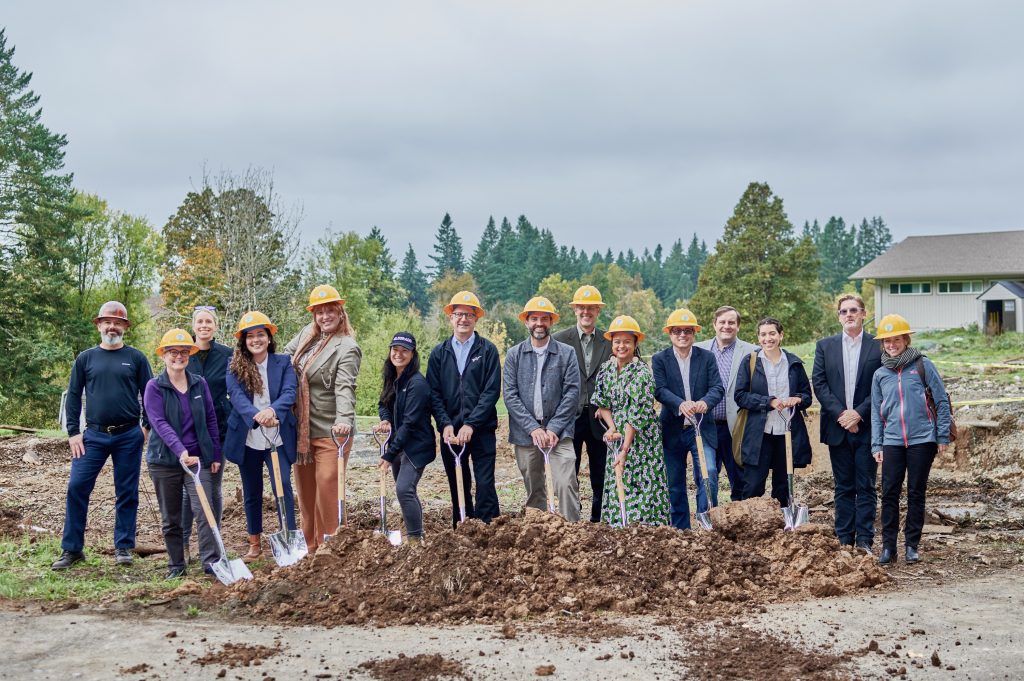
Stakeholders and public officials participate in the 2023 groundbreaking of the Parrott Creek youth treatment facility, which was designed by Adre, in Oregon City.
Adre’s projects demonstrate how development can also serve as a tool for economic repair. A powerful example is the firm’s partnership on the Williams & Russell Project, an equity-centered mixed-use development in North Portland. The project will include an 85-unit apartment building, 20 single-family homes, and retail and office space for Black-owned businesses. Designed for households earning 30–60% of the area median income, the development integrates environmental remediation, net-zero microgrid research, and community design partnerships.
The initiative also addresses historic displacement tied to the expansion of Emanuel Hospital in the 1970s. By creating pathways for ownership and business growth, the project aims to ensure that Black entrepreneurs can start, scale, and remain rooted in the community that helped build the neighborhood.
These collaborative financing efforts have generated approximately $7.2 million in direct economic benefit for Minority, Women-Owned, and Emerging Small Businesses (MWESBs).
Investing in the Next Generation
Adre also advances collective action through workforce development and mentorship initiatives that expand access to careers in the built environment. Through a program called Your Street, Your Voice, co-founded by team members Joe Swank and Jackie Santa Lucia, high school students, particularly Black, Indigenous, and People of Color (BIPOC) youth, are introduced to careers in design, infrastructure, planning, and real estate.
“[The B Corp Certification process] was a rigorous process for us and helped translate our intentions into practice,” says Jackie Santa Lucia. “It has deepened our commitment to impact to not just our client partners and communities, but to ourselves .”
Programs like this help ensure that the next generation of developers, architects, and planners reflects the diversity of the communities they serve.
A Shared Commitment
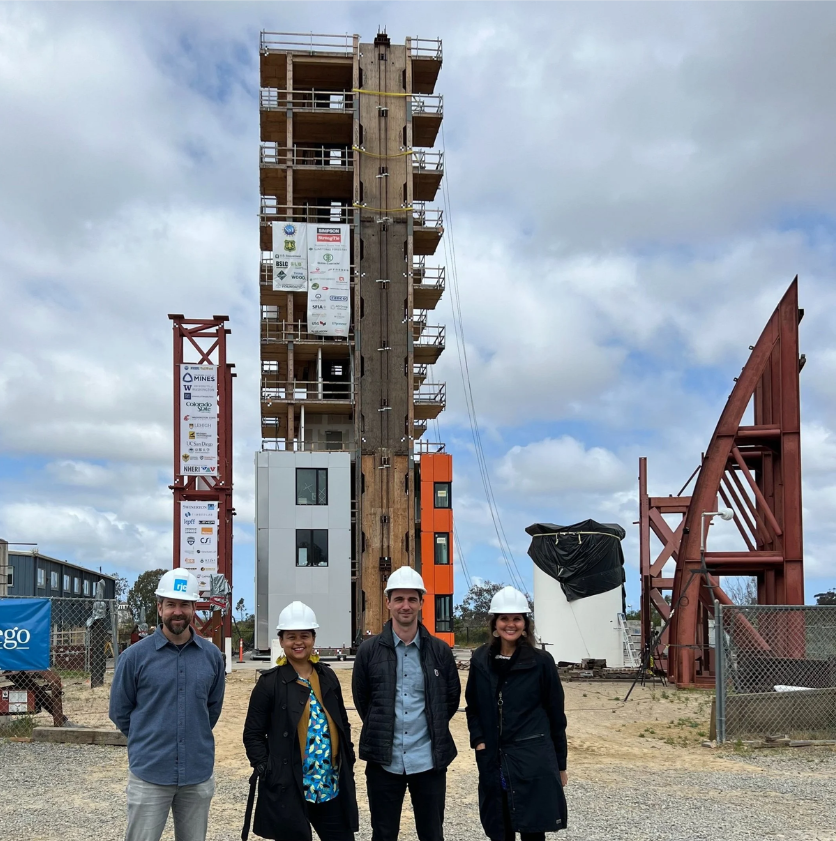
Adre’s team visiting the world’s largest shake table during a demonstration of the earthquake readiness of timber rocking wall systems.
Real estate development has historically been shaped by exclusionary practices, including inequitable access to capital. Even today, more than 99% of developers are white, with Black and Hispanic representation accounting for less than 1%.
Adre represents a different model. A model where community collaboration, inclusive economic participation, and policy engagement are fundamental to the work. B Corp Certification did not change the company’s mission. Instead, it provided a framework to formalize it.
For Adre, its work is visible not only in the buildings it develops, but in the partnerships it builds, and the future it helps shape through collective action. To learn more about Adre and their collective action effort, read their full case study.
Sign Up for our B The Change Newsletter
Read stories on the B Corp Movement and people using business as a force for good. The B The Change Newsletter is sent weekly.