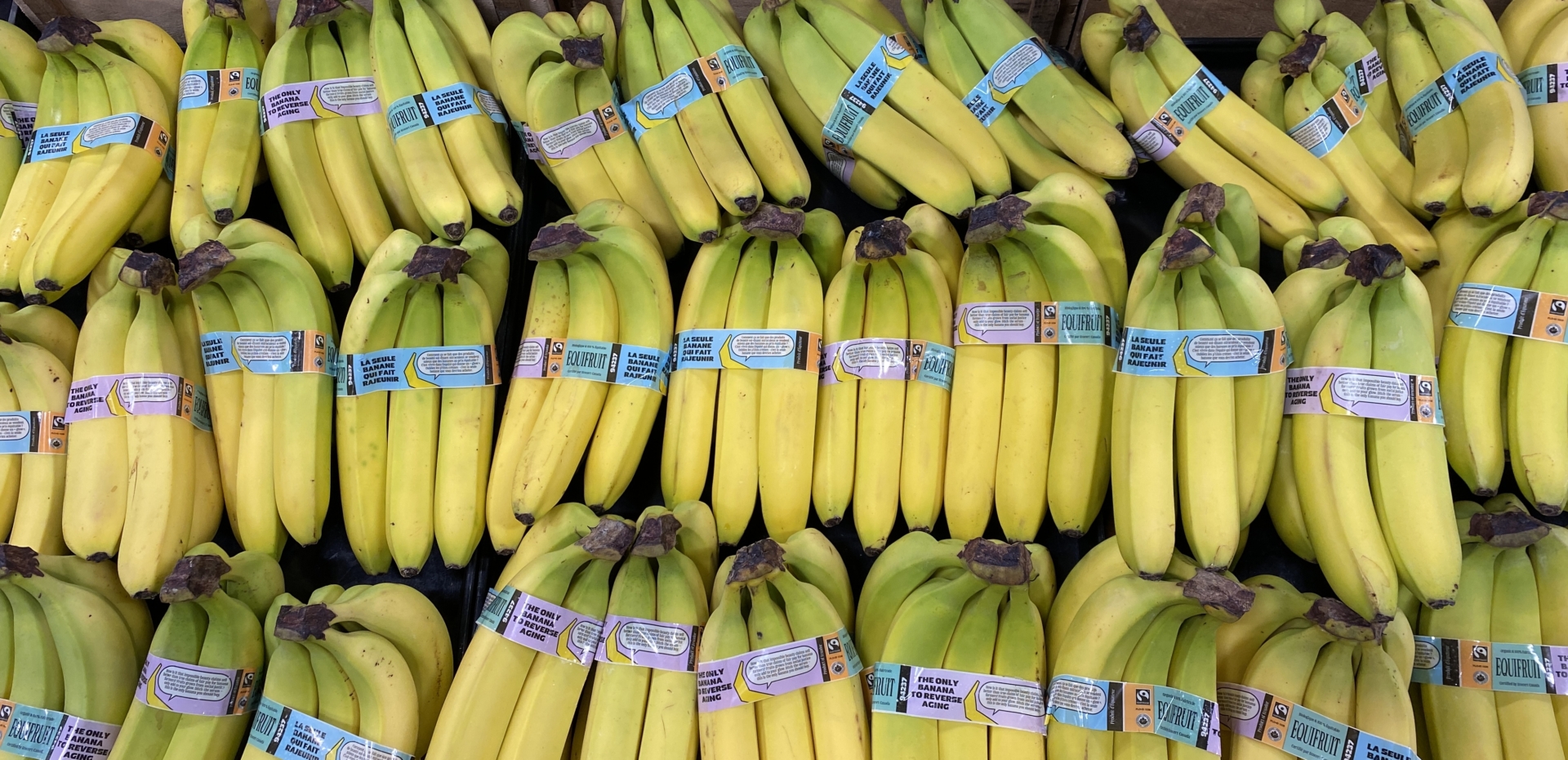
20 Years of Banana Badassery: Lessons from Two Decades of Balancing Purpose and Profit at Equifruit
April 13, 2026
Bananas are among North America’s favourite fruits; they’re reliable, affordable, and available year-round. They’re so popular they even have a national celebration: April 15, National Banana Day. However, despite bananas being a weekly staple for many North American households, how many people could honestly say they think twice about where their bananas come from—and how they have consistently remained so cheap?
One woman thinking very closely about these questions is Jennie Coleman, President and Co-owner of Equifruit, North America’s leading Fairtrade banana brand and Certified B Corp. As Jennie tells us, the banana industry has prioritized low costs over fair wages and sustainable practices for far too long. Since 2006, Equifruit has been on a mission to change that reality and bring the banana industry into the 21st century. This year, both Equifruit and the B Corp movement are celebrating 20 years of positive impact.
Just ahead of National Banana Day, we sat down with Jennie to reflect on what the last two decades have taught her about driving change in an industry resistant to change, balancing purpose and profit, and the role that B Corp Certification has played along the way.
Q: Bananas are one of the most affordable and widely consumed fruits in North America. When a product is seen as “everyday” and low-cost, how do you make impact and fairness part of the business model?
This is really the core tension Equifruit was set up to tackle. Bananas are cheap because banana farmers and workers, the people responsible for growing, harvesting, and packing the fruit, are essentially subsidizing bananas for us through low wages, unpaid overtime, and poor working conditions.
The corners being cut to keep banana prices low have real consequences for banana farmers and workers. And most shoppers have no idea this is happening. They’ve never had a reason to question why bananas cost what they cost, because the price has been artificially low for so long that it feels normal.
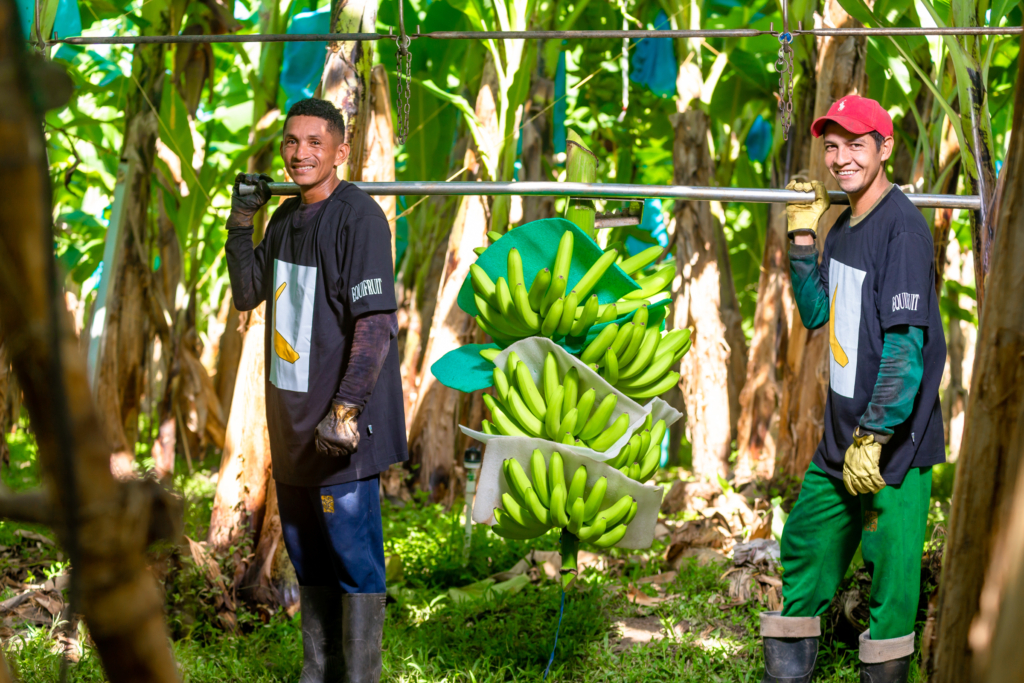
Workers carry a fresh harvest at Equifruit partner farm Agriflores in Colombia. Photo: Guillermo Marcelo Cantillo Freja
We’re on a mission to right the wrongs of banana business history, and a huge part of that is education. It’s not just consumer education, either, but also retailer education, because the expectation that bananas will always be priced low is deeply embedded on the retail side, too. Our role is to make the case for why Fairtrade matters, why the pricing model needs to shift, and customer demand for fruit that doesn’t come at someone else’s expense.
Fairtrade values were baked into Equifruit’s business model from day one. This was never an add-on or a marketing angle for us. It’s the reason the company exists.
The more bananas we sell, the more positive impact we have for banana farmers and workers who, through Fairtrade, earn fairer wages, work under better conditions, and receive a Fairtrade Premium for investment in community and livelihood projects. So for Equifruit, growth isn’t just a business goal, it’s how we deliver on our mission of a better banana industry.
Q: Many businesses struggle to balance purpose and profit. What has that balance looked like in practice for Equifruit over the past 20 years?
In the early days, Equifruit was barely profitable. When you’re building a business that refuses to cut corners on fairness, the margins can be tight and growth can be slow. But I’ve never seen purpose and profit as being in opposition to each other. As a business, we are motivated to grow sales by the positive impact we can have for banana farmers and workers.
Equifruit has principles, built through the Fairtrade Standards, that we refuse to compromise on. For example, the Fairtrade Minimum Price that we pay for bananas reflects the local cost of sustainable production, and that’s non-negotiable. Our values are also locked in through a B Corp mission lock, which means our social and environmental commitments are legally protected, even as the business grows and evolves.
It’s also important to remember that Fairtrade isn’t a charity, and nor is Equifruit. It’s just the way that all business should be done, with transparency and fairness at its core. We’re not doing anything radical here. We’re just doing business the way it ought to be done.

Impact Topic in Practice Guide: Human Rights
This guide from B Lab U.S. & Canada provides examples and resources from B Corps and partners to support companies in meeting the requirements of the Human Rights Impact Topic for B Lab’s Standards V2.0.
Q: Where did B Corp Certification enter Equifruit’s journey? How has it strengthened your work?
At Equifruit, we had been thinking about B Corp Certification for many years before we started the application process. We achieved certification and joined the B Corp community in 2024. I’ve found that it gives us a powerful way to express Equifruit’s values as a business that goes beyond our product category or industry. It offered us a shared language for what we’d always believed in, and it connected us to a community of businesses that feel the same way.
Externally, the B Corp Certification helps us build trust and adds credibility. It tells our customers and retail partners that we’re not just talking about values and impact; we’ve been independently verified. That matters, especially in an industry where greenwashing is a real concern.
Internally, the certification process was transformative. As a relatively small business, it pushed us to put proper systems in place to track and improve our performance across the entire business. We formalized a lot of things that had been instinctive up to that point.
Joining a network of businesses that share your values and are committed to using business as a force for good has been one of the most energizing parts of this whole journey. When you’re a small company trying to change an enormous industry, having a community of like-minded companies to talk to and draw from their shared expertise makes a real difference.
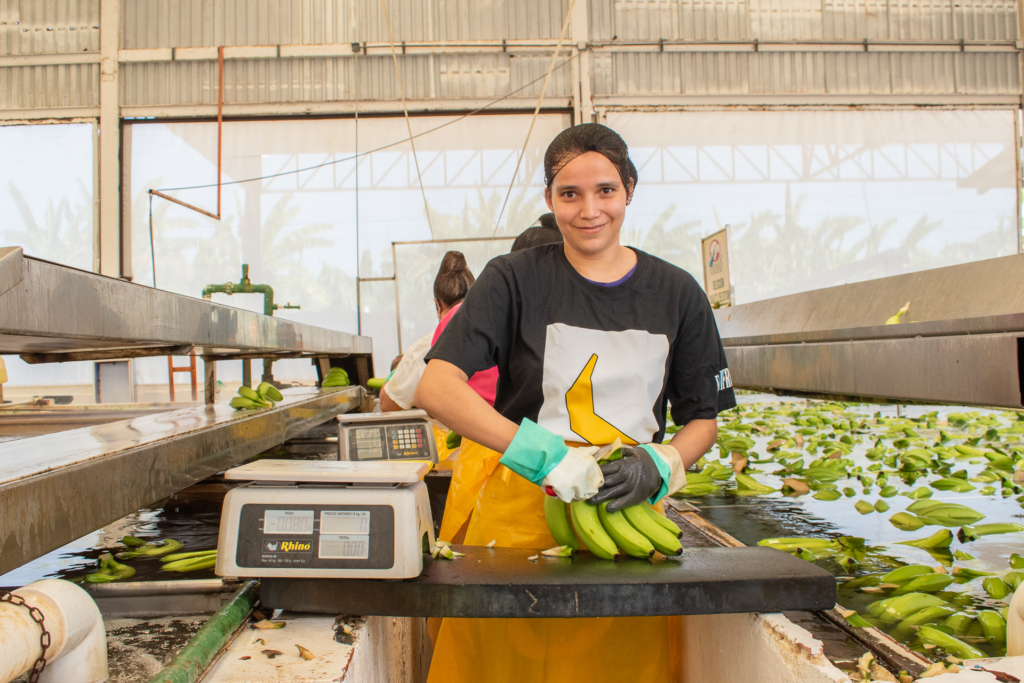
Workers weigh and process bananas at an Equifruit partner facility in Mexico. Photo: Jose Ramon Campos Gutierrez
Q: What has been the hardest lesson in pursuing impact for two decades?
Patience! The slow pace of systemic change and the patience it requires to keep pushing for something better, year after year, is definitely something I’ve learned in the last two decades.
The biggest challenge we face is changing mindsets about banana pricing. Consumers have been conditioned for years to expect bananas at rock-bottom prices, and shifting that expectation is not something you can do with a single campaign alone.
We’ve had to learn how to get people’s attention and make them think twice about their bananas, and that takes creativity, persistence and a willingness to be a bit extra. Which, if you know the Equifruit brand, you’ll know we’re not afraid of.
But what keeps us going is the progress that we’re seeing in the banana industry. Equifruit’s year-on-year growth is a testament to progress in the right direction, slowly but surely, and this motivates me and my team to keep fighting.
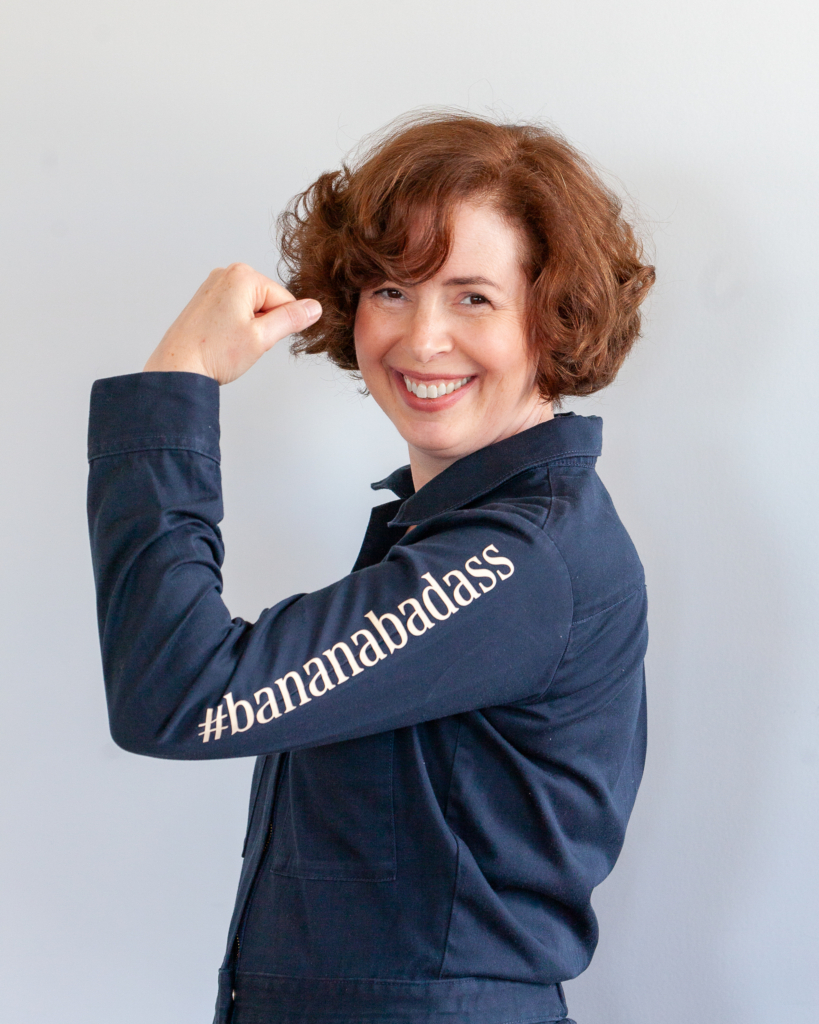
Equifruit President Jennie Coleman
Q: Looking ahead, what do the next 20 years require, from Equifruit and from the B Corp community?
We need to be responsive to growing challenges like climate change, which is already affecting banana-growing regions in real and urgent ways. Factoring in climate resilience measures and increasing accountability along the supply chain will continue to be critical.
I see the evolution of the B Corp Standards as a really positive move for continuing to improve impact across the board. The bar should keep rising. And I’d love to see more B Corps engaging in complex, high-impact sectors where the work is harder, but the potential for meaningful change is enormous.
As for Equifruit, well, as we like to say, we’re on a mission for Global Fairtrade Banana Domination. This is our way of saying that our goal is for Fairtrade to go mainstream and for responsible sourcing and ethical supply chains to become the norm. We’ve spent two decades proving that you can build a profitable business free from exploitation, and we’re just getting started.
Want to be part of the change? Find Equifruit Fairtrade bananas at a retailer near you by visiting equifruit.com/find-our-products. If they aren’t available in your area yet, let your local store know you want Equifruit on their shelves. Every request tells a retailer that their customers care about where their bananas come from and who gets paid fairly for growing them.
—
B The Change gathers and shares the voices from within the movement of people using business as a force for good and the community of Certified B Corporations. The opinions expressed do not necessarily reflect those of the nonprofit B Lab.
Sign Up for our B The Change Newsletter
Read stories on the B Corp Movement and people using business as a force for good. The B The Change Newsletter is sent weekly.