
The Early Adopter Experience: An Interview With Jeffrey D. Stewart of Enharmonic Encounters
June 22, 2026
As B Lab™ celebrates its 20-year anniversary, it also looks forward to a new era of B Corp™ Certification. B Lab Standards V2 were released last year, and as of March 2026, they are now the new criteria under which B Corps certify.
Companies entering the recertification process this year are likely to experience a transitional period of adjustment as they examine how the new criteria apply specifically to their organization’s size, structure, and scope of impact.
Fortunately, they don’t have to undergo their journey alone. Companies like Enharmonic Encounters provide consulting and guidance to current and aspiring B Corps seeking to understand—and successfully implement—the B Lab Standards V2.
The company isn’t just “talking the talk,” either: Enharmonic Encounters is the first B Corp in the U.S. to successfully recertify under B Lab Standards V2! As such, they are uniquely prepared to act as guides while supporting B Corps through certification and recertification.
To help B Corps understand what this process looks like—and to hear firsthand from an organizational leader pioneering this area of expertise—B The Change sat down with Enharmonic Encounters’ Jeffrey D. Stewart, CT, to get his perspective on the recertification experience.
Lauren Everett (Manager, Content & Digital Storytelling, B Lab U.S. & Canada): Congratulations on being one of the first B Corps in our region to recertify! If you had just one takeaway you wanted other companies facing certification and recertification to understand, what would it be?
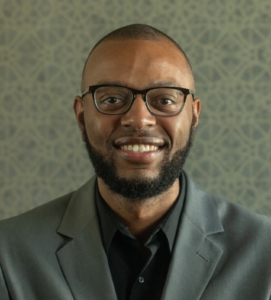
Jeffrey D. Stewart, CT (Founder and Executive Director, Enharmonic Encounters)
Jeffrey D. Stewart, CT (Founder and Executive Director, Enharmonic Encounters): Thank you! As a leader deeply embedded in this ecosystem in a multitude of ways—from a consultant personally guiding companies on their B Certification journey to a language professional amplifying the voices of non-English-speaking stakeholders across our global consolidation—we felt strongly about positioning ourselves at the fore of this great transition to the B Lab Standards V2. We wanted to set an example for our ecosystem to alleviate the uncertainty (or even anxiety) many of us are feeling around the new requirements.
As a small company ourselves, our main goal in proactively recertifying was really to demonstrate that compliance is, in fact, a realistic and worthwhile pursuit, even for the smallest of companies.
The truth of the matter is small companies still make up the bread and butter of our business ecosystem. With so many of us feeling some degree of uncertainty around remaining an active part of our global B Corp network, we believe we are acting as the inspiration that our ecosystem needs to see. We ultimately took initiative on recertifying under the new B Lab Standards for the benefit of our ecosystem.
The learnings and experiences that we’ve taken away from completing the full Certification cycle equip us to more effectively serve our partners on their own B Certification journey and be more informed advocates of the pillars of Certification. We can translate the standards into terms that companies can understand and implement on the ground, which we demonstrate through what we’ve done ourselves.
Lauren: I wanted to get some perspective from you, since you have this duality within the community, because you have your own personal experience of going through research and all your years of being a consultant. What is your vision of how you can support companies going through research, having done it yourself?
Jeffrey: My vision for it really stems from what we learned by completing the full life cycle of certification.
Our biggest realization from this process is that our work is more deliberately centered around JEDI principles than we initially realized. Our newly published Purpose Statement affirms that we exist to incubate a global society that is more representative of our [country’s] diversity. That purpose ripples out and manifests in every requirement covered by the new standards, which I encourage you to explore on our newly updated Impact Page, where we’ve made all of our evidence publicly accessible to all stakeholders.
Coming out on the other side, our identity and focus are more synchronized than ever before. The real crux of what we’re looking to do in leveraging this experience is bring more Black- and Brown-owned companies with us in our ecosystem, particularly in the United States and Canada. We already don’t have a very high degree of representation. I see that by having our company’s face visible as one of the first in our region. That’s something that can be leveraged to really speak to the Black, Indigenous & People of Color network and to new minority-owned companies that may be thinking about [B Corp] Certification.
One concern I have is that these companies may feel a bit overwhelmed before they even get started. I still feel at times that the ecosystem is a bit lofty for companies when you look at the investment, both from the perspective of the certification itself and the financial investment made every year to maintain it. Unfortunately, with this transition, some companies are discouraged, and they may be intimidated by the overhead that the new standards seem to demand.
What we want to do is make a push and make a very serious case that it’s well worth remaining in the community and putting yourself on a path for compliance. Black and brown professionals need to see themselves in the space. So we see that, from our perspective, we are in a very privileged position to work toward that end. We’ve codified it in our purpose, and we really want to use this moment to create a surge in Black- and Brown-owned companies in the B Corp ecosystem.
Lauren: I love that you touched on that! That was beautiful. I do have another question about your perspective and your mindset going into recertification, especially as a small business: I’ve heard from several B Corps that just upon looking at the new standards, it seems daunting—it seems unattainable. Did you have similar feelings? And if so, how did that evolve over your process of going through recertification?
Jeffrey: It’s a great question. I would say, at the beginning, it did appear daunting to some degree.
I admit fully that I did not read the 1000 or so page document that was the comprehensive explanation of the standards. Instead, I learned by taking advantage of the Impact Topic courses on Thinkific and attending all the webinars that were made available. Only after getting that initial perspective did I then go on the platform and try to connect our company to the specific requirements, using what I had learned in all these materials.
For small companies, I believe they’ll be surprised to see that the number of requirements isn’t really as numerous as they may think. One of the things about the education component is that they’ve had to frame it from a perspective of what it is, exactly, that some companies will see when they’re looking to comply.
The presenters showed the standards from different angles to demonstrate how the criteria would change based on if, maybe, you were a medium-sized company or if you were operating in an environmentally intensive sector.
For small companies such as ours and plenty of others, we are service-based companies. That changes the degree of intensity of the requirements.
For us, we really only had one or two requirements to cover across the Environmental Stewardship and Circularity (ESC) and Human Rights (HR) impact topics—because the Human Rights standards tend to go together with ESC. Looking at the other Impact Topics, the heaviest lift for us was going to be the Purpose and Stakeholder Government (PSG) standards. There were three requirements that applied directly to us in that single impact topic.
So, for most small-to-medium-sized companies, outside of Purpose and Stakeholder Governance, there’s really one or two requirements in each Impact Topic you will need to focus on. If you are a company with no workers, for example, you don’t see the Fair Work standards come into play. So, you’re likely covering six out of seven impact topics, with maybe one or two requirements in each that you need to comply with.
When you start to break it down that way, companies may feel a bit more at ease. But I see that —despite all of the resources that have been made available—companies may not have time to consume all of those resources and really gain an understanding for themselves.
Lauren: For those who act as a type of “solopreneur,” meaning they don’t have employees—or perhaps for those that do have employees but don’t have the capacity to create an impact team at their company or assign someone a “B Keeper” role— what advice would you give them in order to make this process more manageable, keeping in mind what is going to be different from what they had to do under B Lab Standards v1.6?
Jeffrey: In general, companies will have to maintain a degree of attention on certification throughout the year and for every year in between the actual audit.
One of the recurrent themes we saw with B Lab Standards v1.6 is that companies would get certified and then put their consideration of the standards aside for 2 to 2.5 years.
With some of these B Corps, after getting certified, they didn’t really keep a close eye on anything; they needed to stay on top of compliance. And maybe they didn’t engage much in the ecosystem with other B Corps, possibly as a result of not feeling that pressure to stay educated and remain in active learning mode. Then, when recertification came around, it was a bit of a scramble to get everything together and see if they were still eligible based on those initial criteria.
The thing about B Lab Standards V2 is that there’s not really leeway to “set it and forget it” after you attain your first B Corp Certification. So I see that companies that don’t have the inherent capacity will have to look more at longer-term planning for certification.
I believe that has to become part of the strategy now for companies that want to remain B Corps. You have to consider it a priority and work it into the yearly allocation of resources. You know, certain actions need to be taken annually or updated annually. It can’t just always be a last-minute scramble a few months before submission.
That’s probably the biggest modification or adaptation where we’re all going to have to make: treating this as an ongoing examination and implementation process. And, of course, that’s why companies like Enharmonic Encounters exist, too. We will take on that capacity for you.
Lauren: Are there any other words of advice that you want to share with the community as companies prepare for recertification—as they’re thinking about becoming a Certified B Corp—and are maybe feeling: “This is not the same process I thought it was going to be.”?
Jeffrey: Ultimately, what’s important to focus on is that the standards have evolved. They’re certainly not the same, to the extent that this will be a new process of continuous learning and implementation for all, including companies that may have been a Certified B Corp since almost the beginning.
It was meant to be that way intentionally. Our ecosystem is evolving to try to meet the challenges that we face in the here and now.
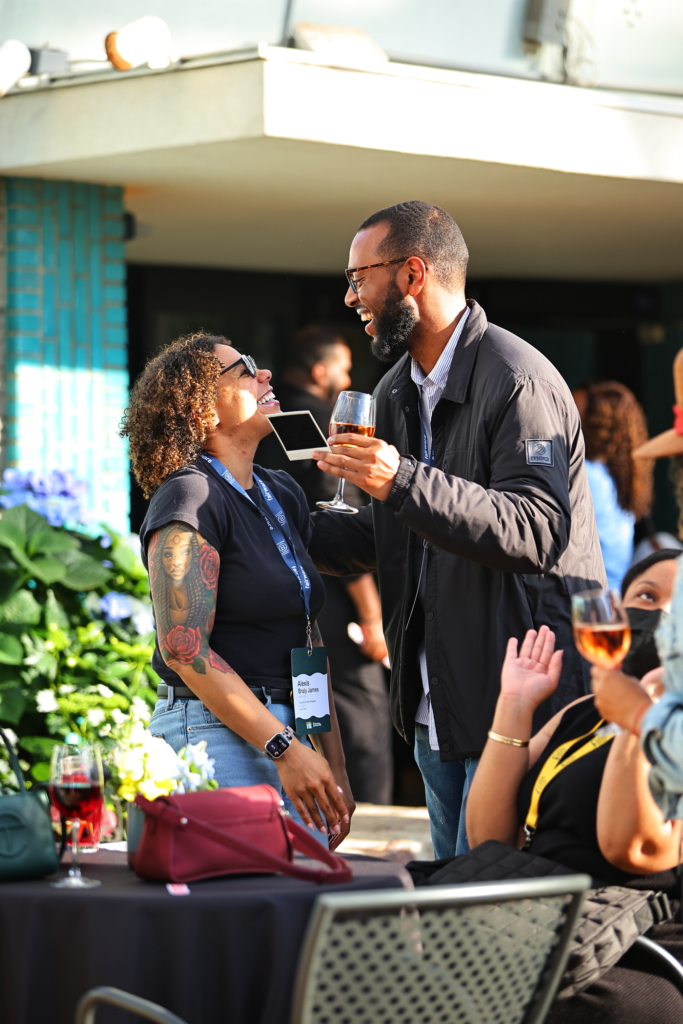
At the same time, I would like all companies to know that they’re not navigating any of these changes alone. We now have, for the first time, real examples of companies that have completed the full certification cycle. Not just us, of course, but now companies of all sizes across many different industries have either completed or are actively involved in the process. Each story can offer us real insight into what it looks like to attain full compliance. It’s all about finding the road you have to take, which means understanding which of the requirements apply to your organization, specifically.
I believe that’s really where a lot of anxiety was: the new standards seemed abstract from a few different angles, and it wasn’t clear to us what it looks like on the ground to really meet this sub-requirement or implement this one action. Once we see with our own eyes some real examples, that affirming experience puts some companies at ease—and we’re really proud and honored to be one of those companies to start setting that example.
Lauren: Okay, I have one more question for you! As B Lab celebrates its 20-year anniversary, I’ve been asking a lot of people: “What does the future of the B Corp movement look like?” And you can consider this particularly from your vantage point, with experience in the evolution of the standards and how this looks when working with so many diverse B Corps. So, with that in mind, what is the vision that you see for the movement for the next 20 years?
Jeffrey: What is the vision that I see for the next 20 years?
Well, for what we’re able to impact over the next 20 years, I see the Browning—as in, the diversification—of this ecosystem and the experience of that as something that’s heavily linked to why we exist. That ethos may be a bit specific to this region of the U.S. & Canada, but I think it’s something other under-recognized groups around the world experience as they try to join this global movement.
That’s at least what we discovered when we applied the new standards to ourselves. Our identity as a Black-owned business and our focus on being a business that can benefit people and the planet are more synchronized than ever before.
What we’re here to do is to incubate this global network for stakeholders of all identities. But as part of that, I really want to see the United States [B Corp community] be more representative of its own diversity. And so, over the next 20 years, this ecosystem needs to have the voices and narratives of Black and Brown stakeholders—and other stakeholders who are part of groups that are under-recognized historically—at the forefront. Because we know and are committed to solutions that under-recognized stakeholders carry.
We have a lot to contribute to people and the planet. We need those voices to have a seat at the table. And that’s what we’re here to do.
Find Your Own Path to B Corp Certification Under B Lab Standards V2—But Don’t Think You Have to Do It Alone!
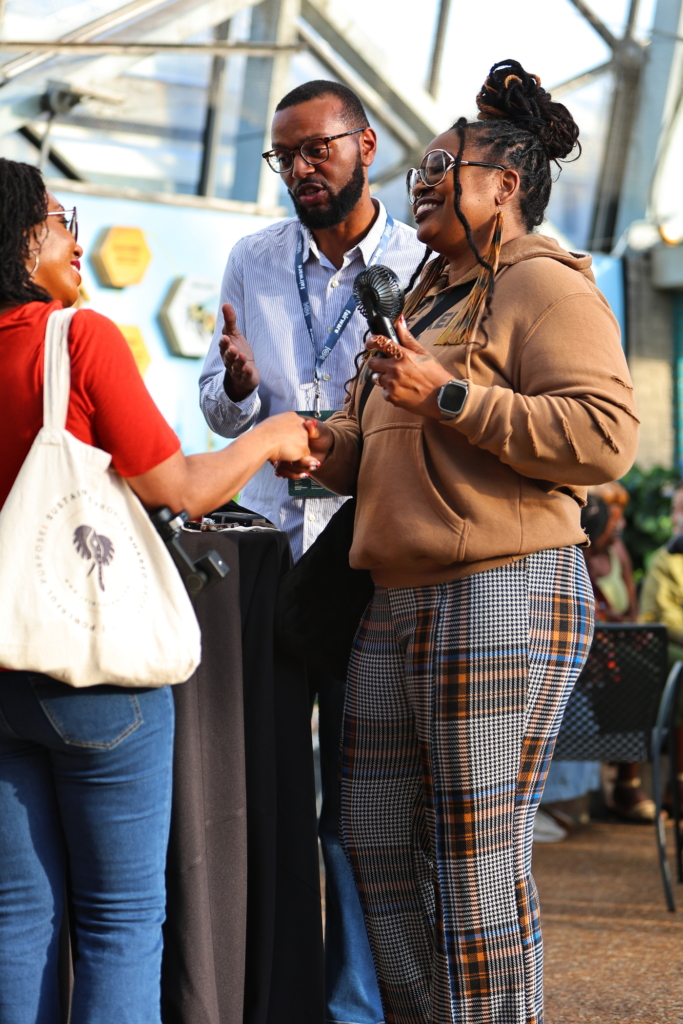
B Lab U.S. & Canada provides an abundance of resources to help companies navigate B Lab Standards v2. Resources like these and companies like Enharmonic Encounters can provide much-needed support, whether you are a company aspiring to become a B Corp, a B Corp looking to recertify, or one that is current on its certification but wants to remain in compliance throughout the year.
We want to thank Jeffrey for taking the time to speak with us and for being so dedicated to the B Corp community. If we can all contribute to a shared vision while supporting one another across our own smaller communities, we can truly transform business to benefit people and the planet, one company at a time!
Sign Up for our B The Change Newsletter
Read stories on the B Corp Movement and people using business as a force for good. The B The Change Newsletter is sent weekly.