
Where Collective Action Takes Root: Why B Locals Matter Now
October 26, 2026
On September 21, during Climate Week NYC, a room full of B Corp™ leaders gathered at NYU Wagner for a workshop on climate advocacy and collective action. There, experts from B Lab™ U.S. & Canada walked us through the new Government Affairs & Collective Action (GACA) requirements established as part of B Lab Standards V2.
The American Sustainable Business Network made the case for the business voice in federal advocacy. NY Renews and the New York City Environmental Justice Alliance laid out, without sugarcoating, where New York’s climate fight stands today. Then they handed us something to do before we left: a memo of support for a specific bill sitting on the Governor’s desk.
That afternoon captured something the B Corp community needs to hear clearly as we move into the new standards. Every B Corp is now expected to engage in collective action. Very few B Corps can do it effectively on their own. The infrastructure that makes it possible, in most of the country, is your B Local™.
What a B Local Is (and What It Isn’t)
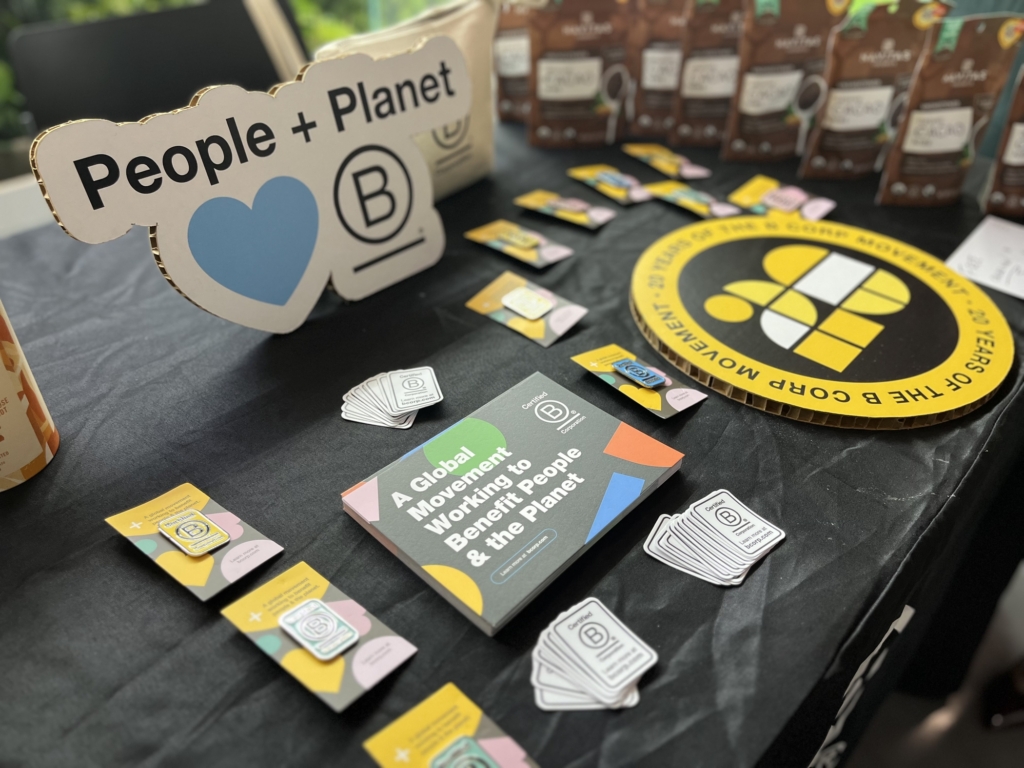
It’s worth being precise about what B Locals are and do because they are often misunderstood.
B Locals are place-based communities of people. Certified B Corporations form the core, joining at the regional level as part of a global movement working to benefit people and the planet.
Led by volunteers and built to create connections, B Locals increase the positive impact of their local B Corp community while raising awareness of the B Corp movement. They are one of several networks in the B Corp ecosystem.
B Locals are not an official part of B Lab. B Lab, a nonprofit, sets the vision and strategy for the movement, builds certification standards, and oversees the process of attaining and maintaining individual certifications.
B Locals are independently run organizations or committees, most commonly governed by volunteer boards that work closely with the B Lab team. B Local leaders act as stewards of their regional communities: organizing events, leading awareness initiatives, building partnerships, and creating learning opportunities.
Today, there are more than two dozen B Locals across the United States, from B Local Asheville & WNC to B Local Bay Area, Florida for Good, Good for Michigan, B Local Texas, and B Local Wisconsin. Here in New York, B Local NYC is home to more than 170 B Corps in the city and beyond. You can find the full list on B Lab’s B Local Communities page.
That volunteer-led, place-based structure is exactly what makes B Locals so well suited to the work the new standards now ask of us.
Why This Matters Now: GACA Makes Collective Action Mandatory
Under B Lab’s new standards, Government Affairs & Collective Action (GACA) is one of seven Impact Topics every B Corp must address. It has three parts:
- GACA1 – Responsible lobbying. Every B Corp, regardless of size, needs a public, responsible lobbying policy from Year 0 (GACA1.1). Large and larger companies must also publicly disclose lobbying positions and political contributions each fiscal year starting at Year 0 (GACA1.2); Micro, Small, Medium, and companies without workers do so from Year 3 (GACA1.3).
- GACA2 – Collective action. Companies choose from five pathways: mentoring, external research, multi-stakeholder collaboration, public policy advocacy, and thought leadership. Micro companies and companies without workers need at least one collective action. Small and Medium companies need one from Year 0 and two by Years 3 and 5. Large and X Large companies need at least two; XX Large companies need four by Year 3, and from Year 3 the largest companies must include multi-stakeholder collaboration or public policy advocacy among them.
- GACA3 – Responsible tax. This requirement only applies to XX Large and larger companies. It mandates them to report on their actual tax spending, with an emphasis on demonstrating how their tax contributions directly support the development of local social and infrastructure programs.
B Lab’s own summary, Responsible Influence: The GACA Standards, Simplified, frames the whole topic as a call to use political and economic reach as an instrument of repair rather than narrow self-interest.
For smaller B Corps that don’t fund lobbying operations in Washington, Albany, or elsewhere, the function of the GACA standards (as they apply to them) may not seem clear. That’s likely because they don’t understand the individual power they wield with their voice, their presence, their role as community anchors, and the money they spend (directly or indirectly) on advocating for certain public policy outcomes.
The truth is that each business holds power not only as a jobs creator and economic contributor but also as a storyteller: public officials want to feel like businesses are on their side. And, if businesses aren’t, then these officials want to find ways to listen and address concerns they have to hopefully get in alignment.
Even one business talking loudly about an issue like climate change or basic human rights and dignity in their community can be enough to get the attention of a policymaker. Get several businesses speaking in unison, and you have a recipe for actual change. That’s where B Locals can make an impact: deciding on priorities, aligning on what’s needed, and working together to loudly advocate for policy change, all while demonstrating that change is possible within their own daily operations.
Working in unison, B Locals can not only find traction when trying to adopt GACA standards but build momentum as a collective, one that strives to improve the communities and industries B Corps experience from within, every single day.
Find Your B Local (Or Other Advocacy-Focused Groups) and Add Your Company’s Voice in the Call for Impactful Change

One detail from the Climate Week workshop deserves more attention than it gets. In B Lab’s definitions, advocacy is the same as lobbying. That means communicating with public officials through official channels to influence decisions, or trying to shape public opinion (beyond normal marketing) to affect public decision-making. Signing a coalition letter, writing your state representative, or joining an advocacy day all count. So the moment your company takes part in a policy campaign, GACA1 applies, too.
The lobbying/advocacy policy you create, then, doesn’t just live in a drawer. It becomes part of the governance that shows your B Corp wants to see a true difference in the world, something beyond what it can achieve alone.
Here’s the reality for most of our community: the majority of B Corps are Micro, Small, or Medium companies. They don’t have government affairs teams, policy staff, or lobbyists. They have a founder, a few dedicated people, and a strong sense of why they got certified in the first place. GACA asks them to act systemically. B Locals are how that becomes realistic.
So when you start weighing how your business wants to address GACA standards, think outside the four walls of your office. Make a commitment to get involved with your B Local or a similar organization, hear what drives them, and add your voice so that we can all build a better world together. That’s how our global B Corp movement can show up locally, in places where people can get to know us by name.
To find your community, visit our B Local directory. You can also learn more about meeting GACA requirements, along with helpful examples, by viewing our GACA Impact Topic in Practice Guide.
Sign Up for our B The Change Newsletter
Read stories on the B Corp Movement and people using business as a force for good. The B The Change Newsletter is sent weekly.