20 Years of the B Corp Movement, Part Three: The Future
August 3, 2026
These past few weeks, we’ve been examining the B Lab™ story from the perspective of its founders and of the people who continue to hold up the mantle 20 years later—people who remain rooted in the values of B Lab’s original vision but who strive to refine the work in a modern era that demands even more accountability and transparency.
This week, we’re envisioning where this path could take us. As a global movement working to benefit people and the planet, we are ecstatic to see where the next 20, 40, or even 100 years might lead for B Corps™.
Our hope is to see the movement diffuse across all systems, replacing rules that incentivize harmful impacts with those that make businesses more accountable, more rigorous in their self-examination, and more considerate of the people and the ecosystems they affect.
Using the B Corp standards and practices as a model, we want to show everyone who is not yet in the movement how far we’ve come …and how far they could go if they join us.
The Torchbearers
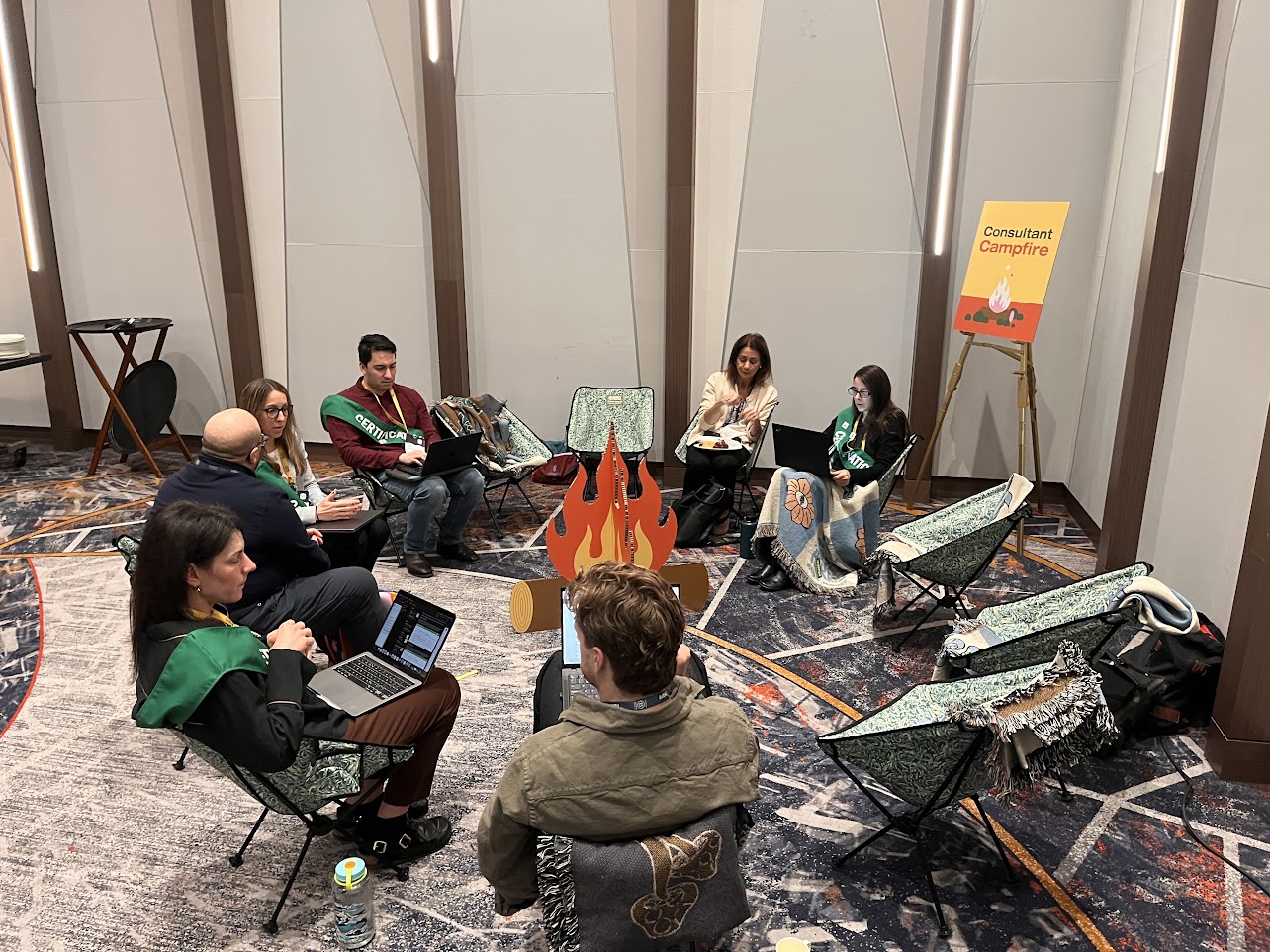
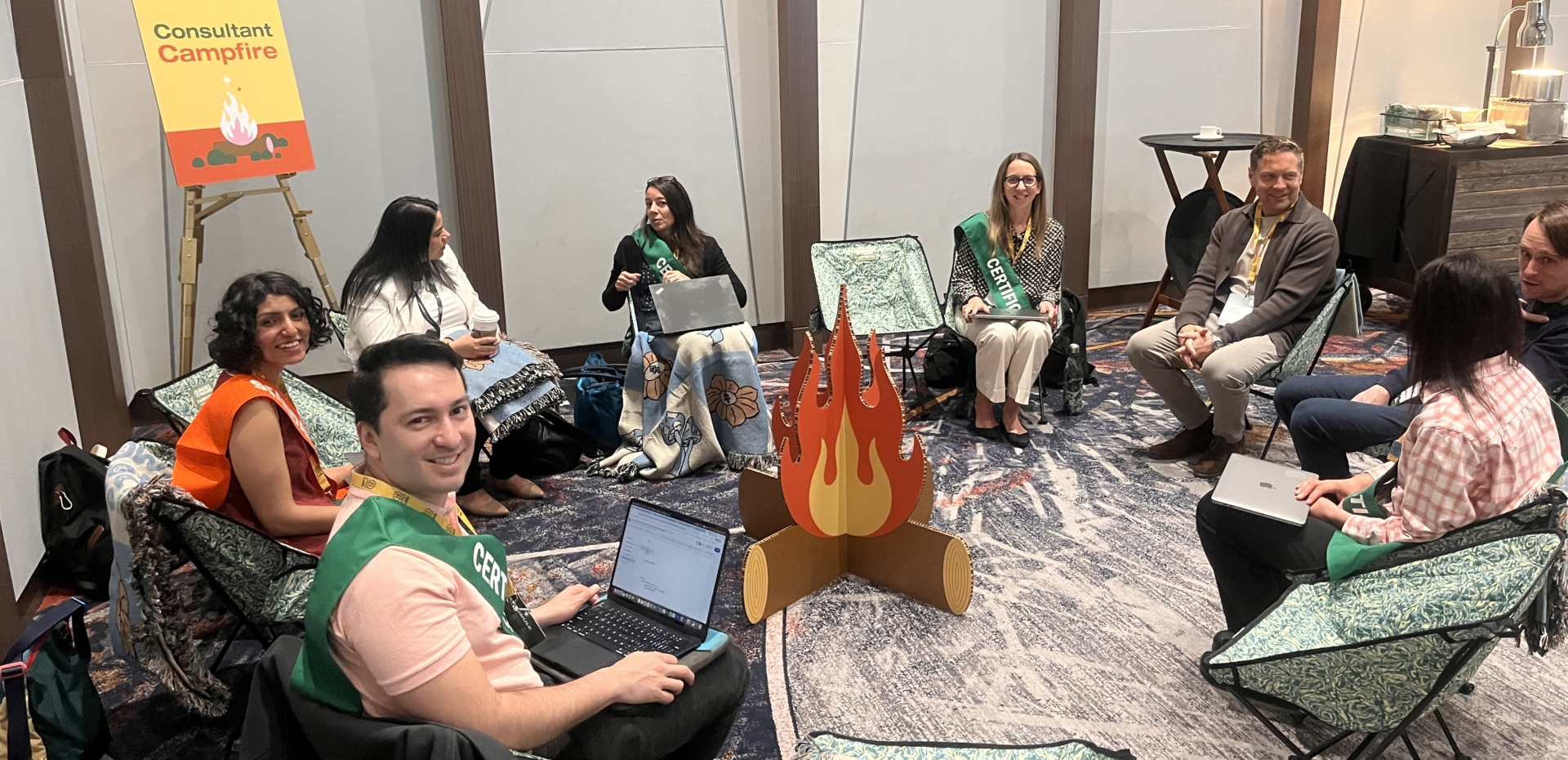
Champions Retreat 2026 attendees receive free guidance from B Corp Certification experts during an ongoing drop-in “Consultant Campfire” event. Photo: Silvia Laserna
For twenty years, the B Lab’s core work has been certification, one company at a time: measuring a company’s impact, holding it to a set of standards most businesses don’t meet, and building frameworks that enable it to keep improving.
Over ten thousand companies across more than a hundred countries are now certified, together employing over a million people. But no company, however good, operates in a vacuum. Every one of them plays by rules it never wrote: a financial system that prizes short-term gains, laws that answer primarily to shareholders over community members, a market that treats responsibility as overhead, and buyers who have come to expect the lowest price, whatever it costs someone else.
Building better companies can’t be enough on its own when the rules incentivize the exact practices and system results we are trying to weed out. So the next twenty years are about changing the rules—the ones written into law and the ones written into custom.
Turning “Above and Beyond” Into Our “Bread and Butter”
A single company can clear a standard. But changing a rule takes a movement, and the companies that proved the B Corp model are now organizing to act as a collective.
Collective action used to be a matter of individual conscience. Now, thanks to concurrent global movements, it’s funded, required, and rewarded. Certification fees cover the assessment and the standards behind it. The new Collective Impact Fund is where B Corps pool money for the rest: the advocacy, coalitions, and research that no single company could fund alone.

Volunteers participate in a Milwaukee river cleanup event held during Champions Retreat 2026, collectively securing the Guinness World Record for “Most Participants in a River Clean-Up (Multiple Locations)” Photo: Tru Earth
The new standards make collective action one of the seven areas every company must clear to certify, so an organization’s internal integrity is no longer the whole of it: a B Corp now has to help make the system it operates in sound, too. And starting in 2027, a new annual award named for late co-founder Andrew Kassoy will give $100,000 to whoever drives the boldest collective action pushing business to answer to more than its shareholders.
Collective action like this is already happening, and what’s most striking is that direct competitors are joining forces.
More than ninety beauty brands have built a coalition to push for tougher rules across their industry, and seven coffee companies launched one of their own this year. The cooperation doesn’t end at industry lines, either. In 2025, B Corps around the world co-signed a manifesto to the COP30 climate summit: a call for governments to treat climate change, nature loss, inequality, and short-term thinking as one connected problem.
What they’re all after is a change to the rules.
Shifting the Incentives and the Focus to Make Stewardship the Default
Companies in the B Corp movement are working to change business rules that come in two forms.
The first is written into law. B Lab’s founders began working direct mandates into corporate guidance by inventing the benefit corporation: a corporate structure in which directors are bound to weigh workers, communities, and the environment alongside profit, writing all those duties directly into the company’s charter. Laws formally recognizing the benefit corporation now exist in at least 51 jurisdictions.
A second legal shift is underway at a scale the movement can’t drive on its own, though B Lab is helping shape it: governments are starting to require every large company to account for impact, often touching on the same areas B Corps have been expected to measure for twenty years.
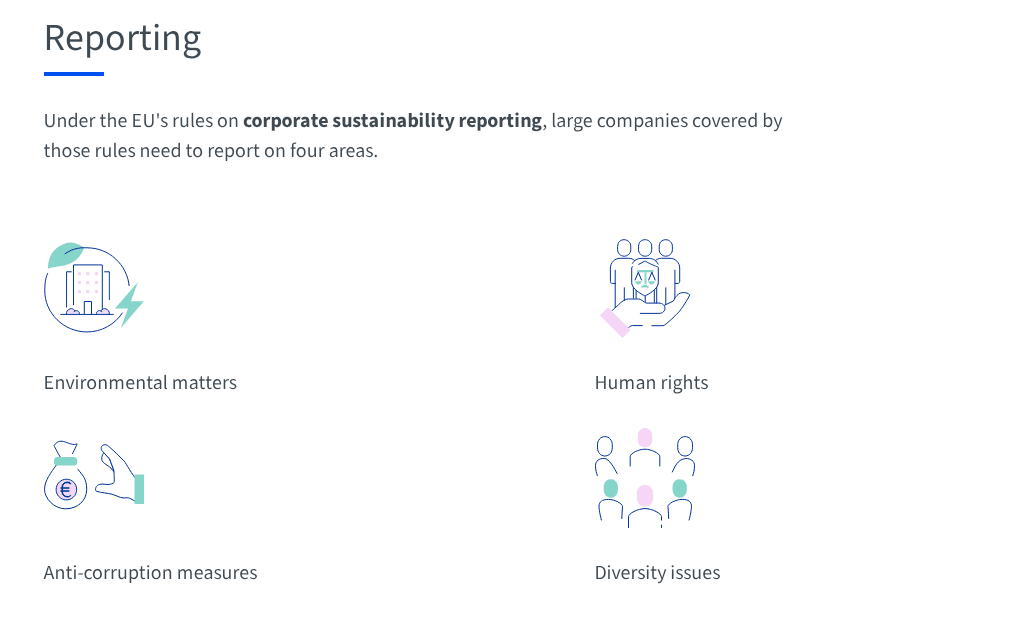
A screenshot from the Council of the EU website (consilium.europa.eu/en/policies/corporate-sustainability/) showing mandatory reporting areas that overlap with multiple B Corp reporting standards.
The European Union’s disclosure rules now ask large companies to report on much of what the B Impact Assessment has long covered: greenhouse-gas emissions and climate plans, working conditions across their own operations and their supply chains, and their effect on the communities and customers around them.
In the UK, the financial regulator now recognizes B Corp certification as a standard rigorous enough to qualify funds for its sustainability labels.
For most of its life, the B Corp movement ran ahead of the law. The law is now catching up.
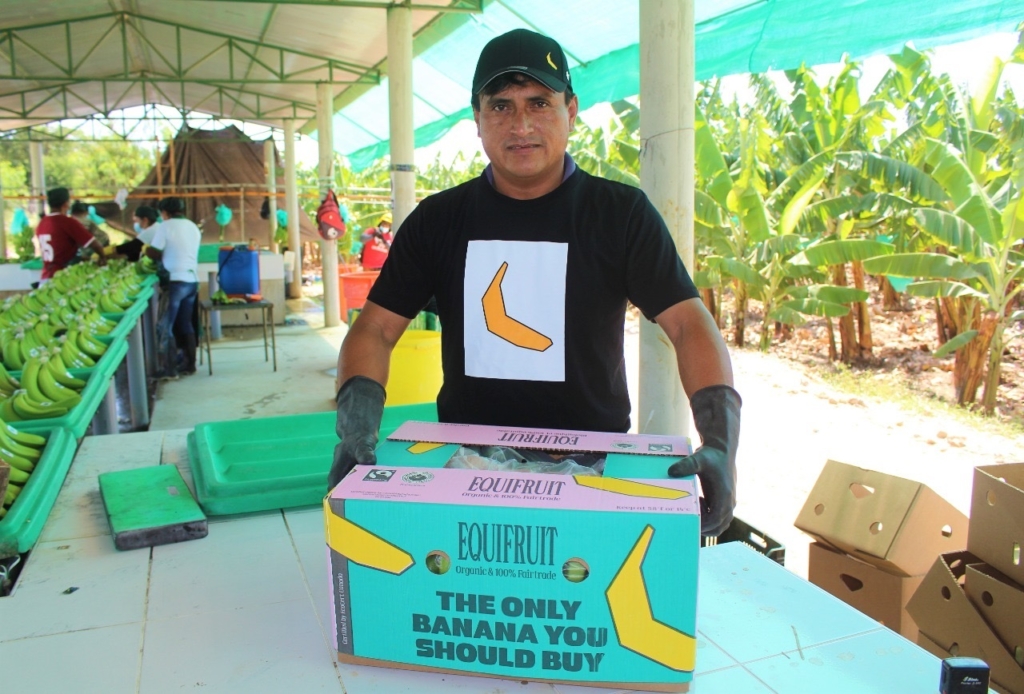
A packer operating as a partner in the supply chain for Equifruit, a company dedicated to incorporating human rights and fair treatment as a basic tenet of their business model. Photo: Equifruit
The second form of rule is written into custom: what the business world counts as success. For most of its history, “success” has meant one thing: returns to shareholders.
The movement’s longer work is to broaden that definition, so how a company treats its people and its place becomes part of how investors, customers, and boards judge whether it has succeeded.
That shift has already begun. In the UK, where the numbers have been studied most closely, B Corps now raise 18% more outside capital than comparable firms. Investors who once looked only at returns are starting to reward companies for how they treat their workers, their communities, and the environment.
Change both kinds of rule, and being a responsible company stops being exceptional. When the law requires care for workers and the planet, and the market rewards it, a business won’t need a logo to prove it’s doing the work.
Think about that: counterintuitively, the biggest measure of this movement’s success will be the day the B Corp logo is no longer needed. We’re working toward a world that runs, by default, the way B Corps already do.
Building the Next Chapter (and Rewriting the Rules) to Make Benefiting People and the Planet a Natural Part of Business
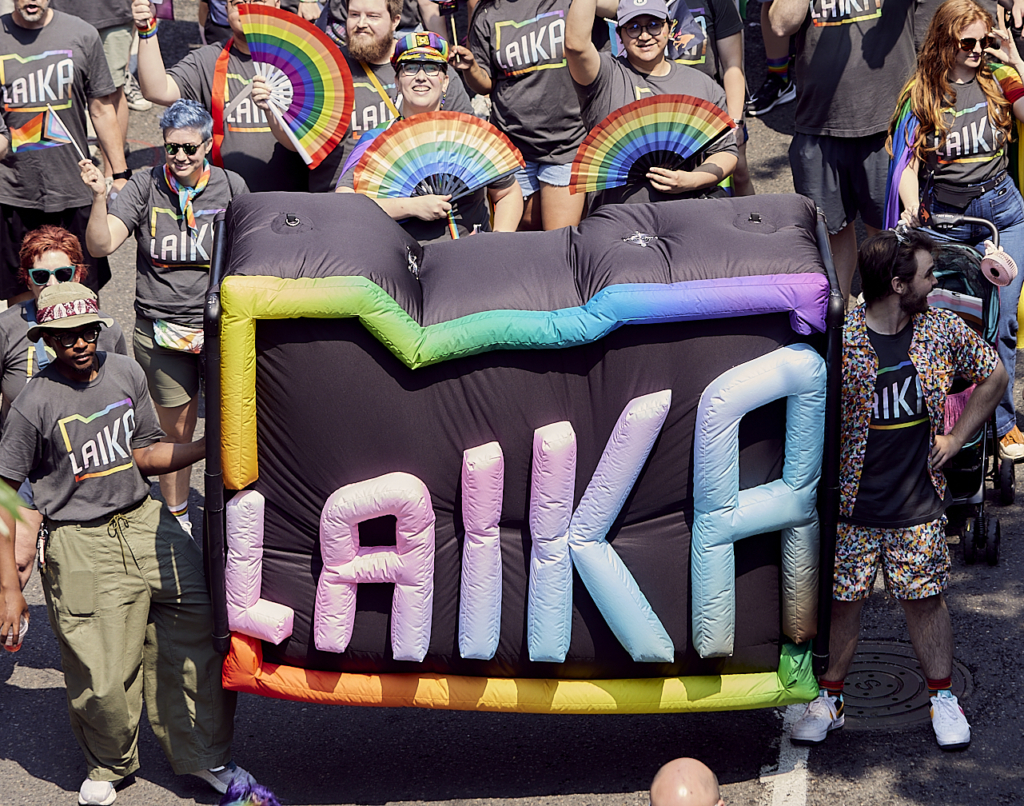
LAIKA animation studio members attend Portland’s Pride parade in 2024. The studio became a Certified B Corp in June 2026. Photo: LAIKA Studios
A new, more responsible, accountable, and regeneratively sustainable world isn’t B Lab’s to build alone—and it never was. The movement has always been carried by the companies inside it. This next chapter belongs to them: the businesses certifying for the first time, the multinationals now meeting standards the largest companies once kept at arm’s length, the newest torchbearers who’ll outlast the founders, and the regions where the movement is youngest and growing fastest.
LAIKA is one of these new torchbearers we are thrilled to have join our ranks. Like B Lab, the animation studio recently turned twenty. They marked the milestone by certifying.
“Becoming a Certified B Corporation,” says LAIKA’s Chief Marketing and Operations Officer David Burke, “is a meaningful milestone that holds us accountable as we continue to improve how we support our people, our community, and the environment.”
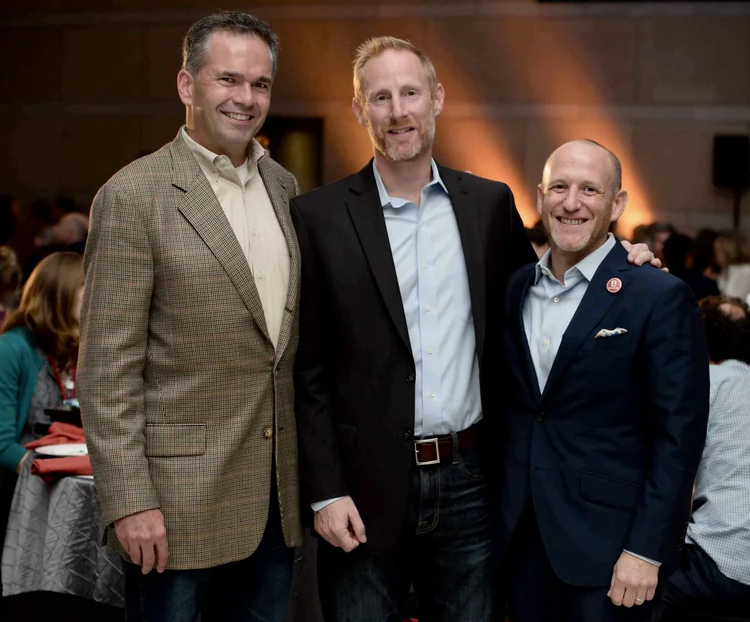
B Lab’s original founders, pictured from left-to-right: Bart Houlahan, Jay Coen Gilbert, and Andrew Kassoy.
Twenty years ago, a few friends asked whether a business could be measured by more than its profit. They built the tools to answer it. The generation that followed made them rigorous enough to hold a movement thousands of companies strong.
The work facing us now is to take what those companies have proven and write it into the rules the rest of the world runs by. That is what it means to carry the movement forward—and to turn the exception into the rule.
Sign Up for our B The Change Newsletter
Read stories on the B Corp Movement and people using business as a force for good. The B The Change Newsletter is sent weekly.