20 Years of the B Corp Movement, Part Two: The Present
July 20, 2026
After 20 years, we can confidently say that B Lab™ has been able to make a positive difference while building a global movement working to benefit people and the planet.
Part of this success can be attributed to the bold thinking and innovative systems developed by our founders. But we also understand that this is not a journey that casually follows along a straight line. Instead, we must deliberately seek positive outcomes for stakeholders across the planet. Accordingly, we must continually scrutinize and rethink our approach so that we are always seeking the greatest net-positive for the current moment.
As stewards of the B Corp™ Certification mark, we should be asking no less.
The Stewards
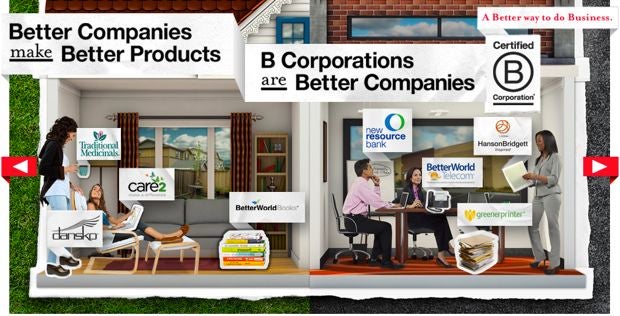
A selection from B Lab U.S. & Canada’s first national ad campaign, launched in 2010.
For twenty years, the B Corp logo has signaled that a company meets our standards for how it treats its workers, its community, and the planet. What began in 2006 as a fringe idea—that a business could answer to more than its shareholders—grew into a movement thousands of companies strong.
As customers came to recognize the Certified B Corporation logo and grew to trust what it stood for, it became something companies wanted to claim.
But a logo is worth only as much as the work behind it. Behind the scenes, systems were already in place to regularly examine the standards and improve upon them, always with reference to the state of the world we find ourselves in at the moment.
When deciding to adopt a whole new version of the standards, B Lab was driven to match the urgency of world events as well as the current demands of global sustainability benchmarks and policies like the EU’s Green Transition directive. We also wanted to ensure that proof of attainment came from an objective, expert-led source, leading to the addition of third-party verification to validate company claims.
To ensure that the wider scope and deeper targets for impact weren’t a deterrent for companies that were small or uninitiated, we implemented a system that scaled demands and expectations depending on the size of the company and the amount of time they held their B Corp Certification.
In other words, both B Corps and B Lab as the certifying body strive to be better stewards, continuing to show we care deeply about what the mark means.
Raising the Standard as a Standard Bearer
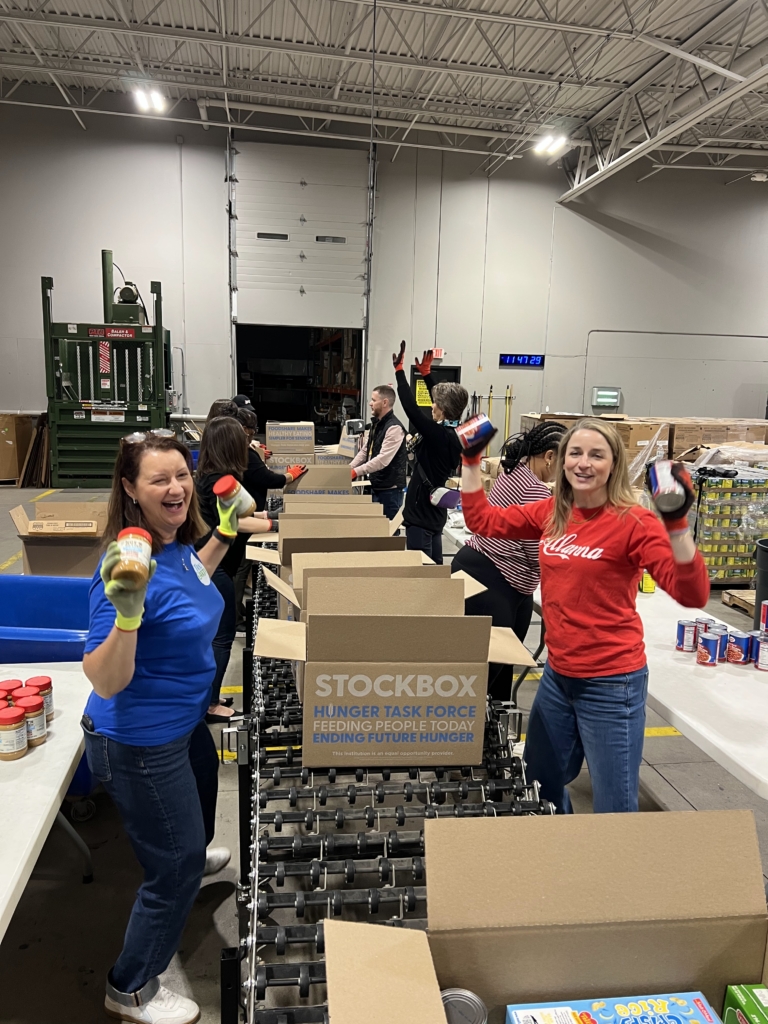
Champions Retreat 2026 attendees help pack food boxes at Milwaukee’s Hunger Task Force food bank.
The initial certification criteria for B Corp were based on guiding principles that, from the outset, were always intended to be revisited periodically as times changed and our understanding evolved.
The original version of the B Corp Impact Assessment had been built for a movement that was just beginning, knowing that it would someday evolve. A single score of at least 80 points out of 200, across five areas from governance to the environment, made impact measurable for the first time and rewarded whatever progress a company could make.
Over a four-year timeframe, where we sought 26,000 pieces of feedback, we made the biggest overhaul of the standards to date. The B Lab Standards V2 replace that single score with a minimum requirement in each of seven Impact Topics. Under this new system, a strong showing in one place can no longer cover for a shortfall in another.
The seven Impact Topics span Purpose and Stakeholder Governance; Climate Action; Human Rights; Fair Work; Justice, Equity, Diversity and Inclusion; Environmental Stewardship and Circularity; and Government Affairs and Collective Action.
Now, companies must exhibit impact across the board. Under this revised system, companies have to make sure they aren’t violating basic tenets of a system that prioritizes positive stakeholder impact. Otherwise, they won’t make the cut.
Ensuring Positive Impact by Design, Not by Whim
To ensure that Certified B Corps truly met the expectations set by our reputation, the B Lab Standards V2 focused on creating internal systems within B Corps. These were systems that demanded values alignment as well as transparency, accountability, and a commitment to continual self-improvement.
So far, the shift has been well received, even among newly certified companies.
Hannah Sandmeyer, Founder & CEO of Up & Over Advisors, which certified for the first time last year under B Lab Standards V1.6, put the V2 standards they will need to comply with on recertification in context. “The B Corp movement has spent 20 years proving that business can be accountable to more than shareholders,” she says. “This next chapter asks whether those values can endure, scale, and transfer across generations of ownership.”
Objective frameworks and criteria set by the B Lab standards, therefore, have the power to ensure that a company remains focused on having a positive impact. Their mission and operations can then remain aligned towards a net benefit for all stakeholders—even after a transition in company ownership.
“In an increasingly consolidated and extractive capital market, mission-driven companies need collaborative pathways to grow, raise aligned capital, and change hands without losing their people, purpose, or accountability,” observes Sandmeyer.
Realizing Impact So Company Missions Dig Deeper
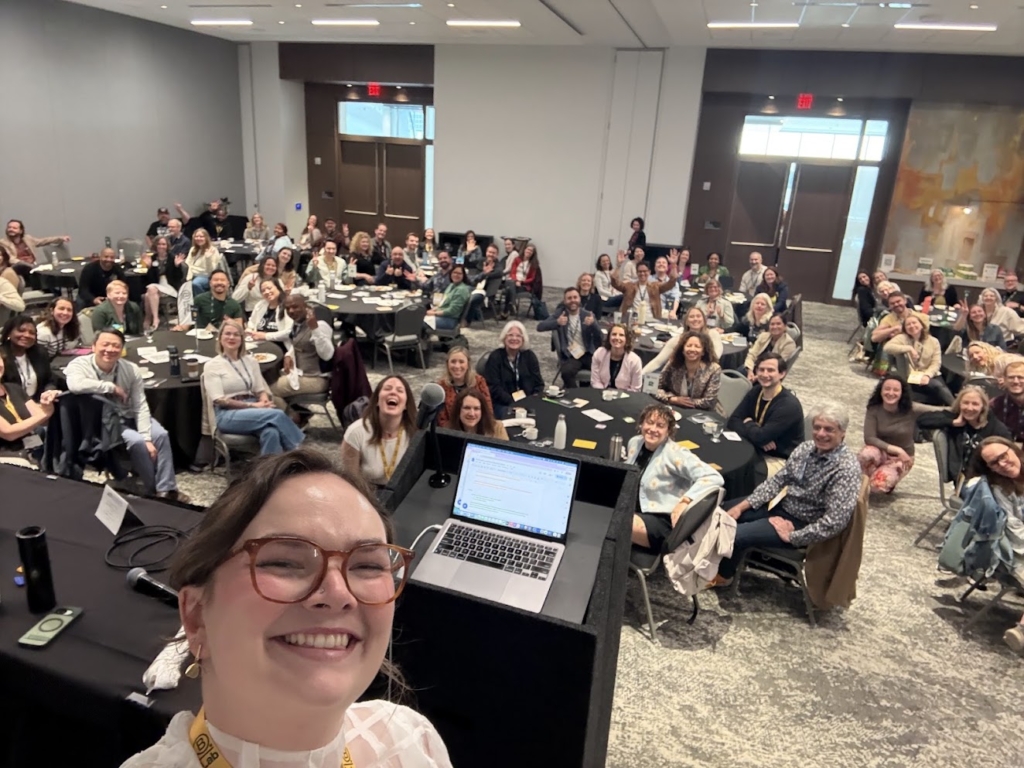
B Network Program Manager Carson Bolding walks Champions Retreat 2026 attendees through B Lab Standards V2
Many of the Impact Topics that make up the B Lab Standards V2 carry specific threshold requirements. A B Corporation’s climate plan has to align with the international target of holding global warming to 1.5°C. Its human-rights work has to reach past its own front door into its supply chain. And every B Corp now has to actively discover the areas it’s most likely to do harm in—and act before it does. The old assessment asked for none of this.
These elevated expectations aim for transformative results. They are even capable of helping companies focus their thinking and develop systems within the impact areas they already had set targets for—or, in some cases, ones they had already prioritized within their mission.
“Becoming B Corp-certified has challenged us to put structure, accountability and reporting behind every part of Equifruit’s operations,” says Equifruit President and Co-Owner Jennie Coleman. The company was founded on the belief that bananas could be enjoyed while preserving principles of fair trade and human rights. All of these priorities were already on their radar, but the B Lab Standards V2 encouraged them to get specific, be more rigorous, and give others a window into their actual impact.
“We’re now digging deeper into our supply chain to build the transparency that the next chapter of the B Lab Standards demands,” Coleman explains. “As North America’s leading Fairtrade banana importer, being part of a global network of businesses committed to using business as a force for good has never felt more urgent, or more energizing.”
Building Trust by Building Rigor
B Lab Standards V2 also represent a major shift in how a company’s performance gets verified.
Before last year, companies largely assessed themselves, with B Lab reviewing what they submitted. Now certification runs through an independent, third-party audit, held to an international standard.
Also, compliance is now a standing commitment: B Corps recertify on a set cycle and have to show continued progress. Meeting the standards the first time is only the start of their journey as part of a global movement working to benefit people and the planet.
Collectively, the changes to the B Lab Standards and the certification process represent concrete steps: a company that’s cleared standardized thresholds on its climate plan, its workers, its human rights, and the rest—each confirmed by an outside auditor.
The same requirements hold whether a company is a five-person studio or a global brand, but they are scaled appropriately to its size and sector: a multinational has to set verified, science-based emissions targets, for example, while a small firm has to measure its footprint and commit to a credible plan for cutting away its negative impacts.
Grounding Expectations to Target a Widening Scope
Certified B Corps are also expected to start small in managing impact areas and grow their scope of monitoring and internal enforcement over time. The goal is to set priorities, gradually achieve greater alignment, and improve over time to comply with increasingly rigorous expectations.
It’s not about getting everything right from moment one. Instead, companies need to create operational systems that make positive impact automatic, focusing on a limited scope that grows as they scale or continue to recertify.
This distinction is critical for companies like US² Consulting. “In a world increasingly defined by fear, polarization, and performative values, stewardship means choosing courage over convenience,” explains CEO Megan Fuciarelli. “At US² Consulting, we believe belonging is created through courageous action, and courageous action is only possible when we remove shame, blame, and guilt from the conversation. That’s what makes authentic accountability possible.”
At the end of the day, Fuciarelli believes that “B Corp isn’t about proving we’re perfect. It’s about committing, every day, to align our actions with our values so people don’t just hear what we believe …they experience it.”
B Lab Standards Can Now Have More Impact as the B Corp Movement Grows
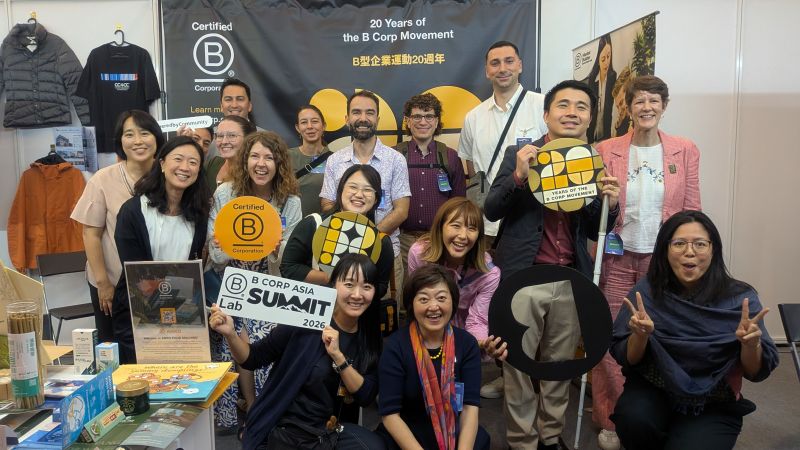
B Corp Asia Summit 2026 attendees
More than 10,000 companies across more than 100 countries are currently B Corporations, yet we still chose this moment to make the certification more rigorous.
Most organizations protect their growth, meaning they set targets and craft policies that make it more likely they’ll add members as they mature. B Lab, instead, got even more stringent. The reason was simple: the logo runs on trust, which is slow to earn and quick to lose.
Those high expectations have set a model that companies can impose to not only improve the impact of their internal operations but also the impact of their work with clients. Digital agency Mightybytes, for example, strives to help its clients understand the environmental impact of their digital presence.
Sustainable retirement company Green Retirement, Inc. sees this work as a form of legacy building, one that extends from standards bearers like B Lab to their company, then to the clients they are helping plan for a better future.
”For twenty years, the B Corp movement has demonstrated that business can be a force for good by continually raising the bar for accountability and stewardship in service of people and the planet,” says Green Retirement, Inc. CEO Rose Penelope L. Yee, CPFA, CHSA. “As a founding B Corp, Green Retirement has carried that mission into the retirement industry by helping organizations align their retirement investments with their values.
Yee emphasizes that aligning values to everyday decisions matters greatly “because we believe the trillions of dollars invested through retirement plans have the power to shape the future we all share. We’re excited for the next chapter of the movement — one defined not only by what each B Corp achieves individually, but by what we build together.”
Better Stewardship Makes the B Mark Mean More
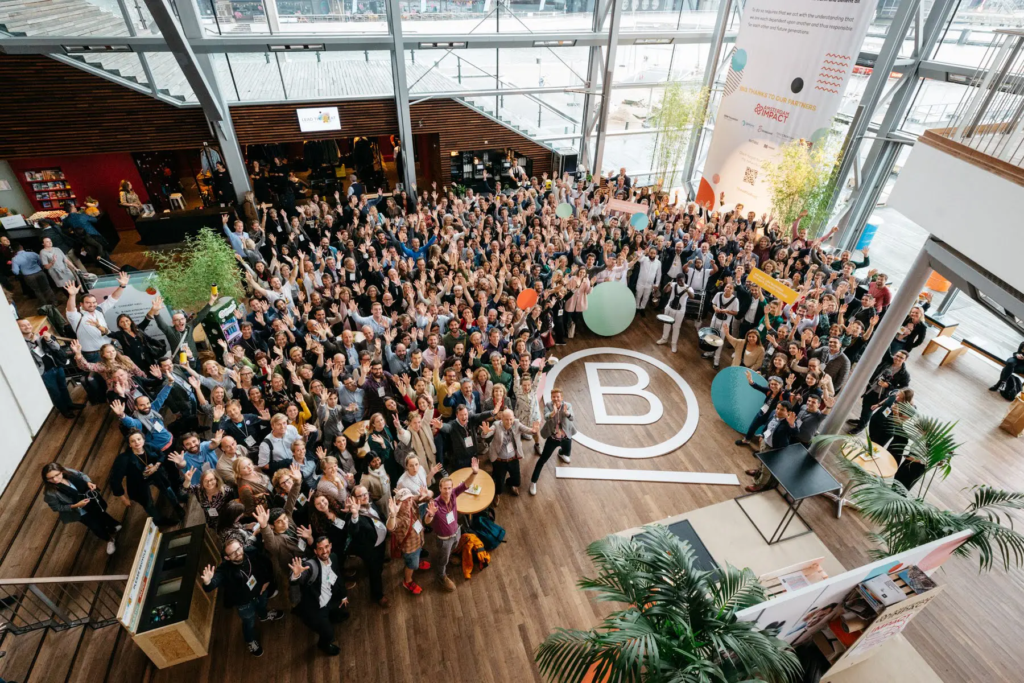
Attendees gather at B Corp Summit 2019 in Amsterdam
The B Corporation model has more than proven itself. B Corps come through downturns better than comparable firms, and where the numbers have been studied closely, they outgrow them.
Research released for B Lab’s 20th anniversary found that if every company matched the climate practices B Corps already follow, global warming could be cut by half a degree by 2100. The model has made its case, and updates to certification ensure that each company is doing something to contribute.
Twenty years in, the work looks a bit different than it did at the start. The founders set the standards; this generation worked hard to build upon them.
Stewardship is easy to mistake for fidelity, for guarding what you were given unchanged. The truer form of stewardship is reading what a moment asks for, and reiterating on what you’ve built to meet it.
As we’ve uncovered in our recent survey, this isn’t work that goes unnoticed, either. Net awareness of the B Corp brand in 2025 has increased 4% since 2023, with 40% of respondents saying they know what B Corp Certification is and what it entails. Trust in the B Corp Certification has also increased in the past year from 44% to 50%, and nearly 60% of adults who are familiar with certification said that the B Lab Standards are “very” or “extremely” rigorous.
With our third-party audit process in place and the expansion of our standards to seven impact areas, the movement’s stewards rose to what this moment required, and we expect consumer trust to rise even higher, too.
This is the type of work that tends to happen behind the scenes, but it’s being brought to the forefront. Consumers are warier and more worried than ever about the impact their dollar has. With the B Lab Standards evolving and over 6,000 B Corps around the world striving to meet them, both people and the planet can know that there is a movement out there that wants to see them thrive.
Sign Up for our B The Change Newsletter
Read stories on the B Corp Movement and people using business as a force for good. The B The Change Newsletter is sent weekly.